
Key points
- Dirty copper is copper with something on it that isn't copper.
- Cut off fittings, brackets and soldered joints to move copper up a grade.
- Never burn wire, and keep dirty and clean copper in separate piles.
In this guide
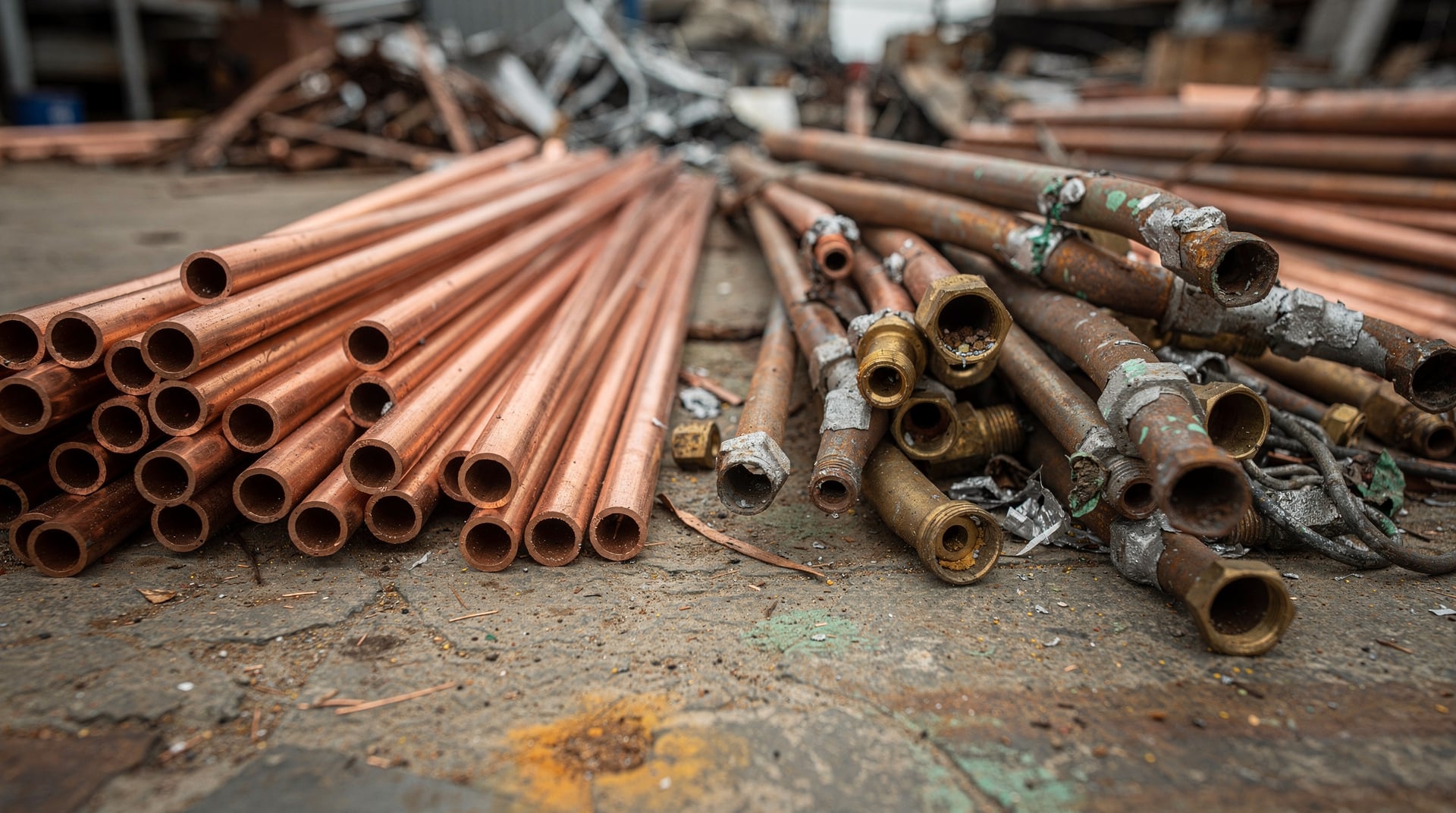
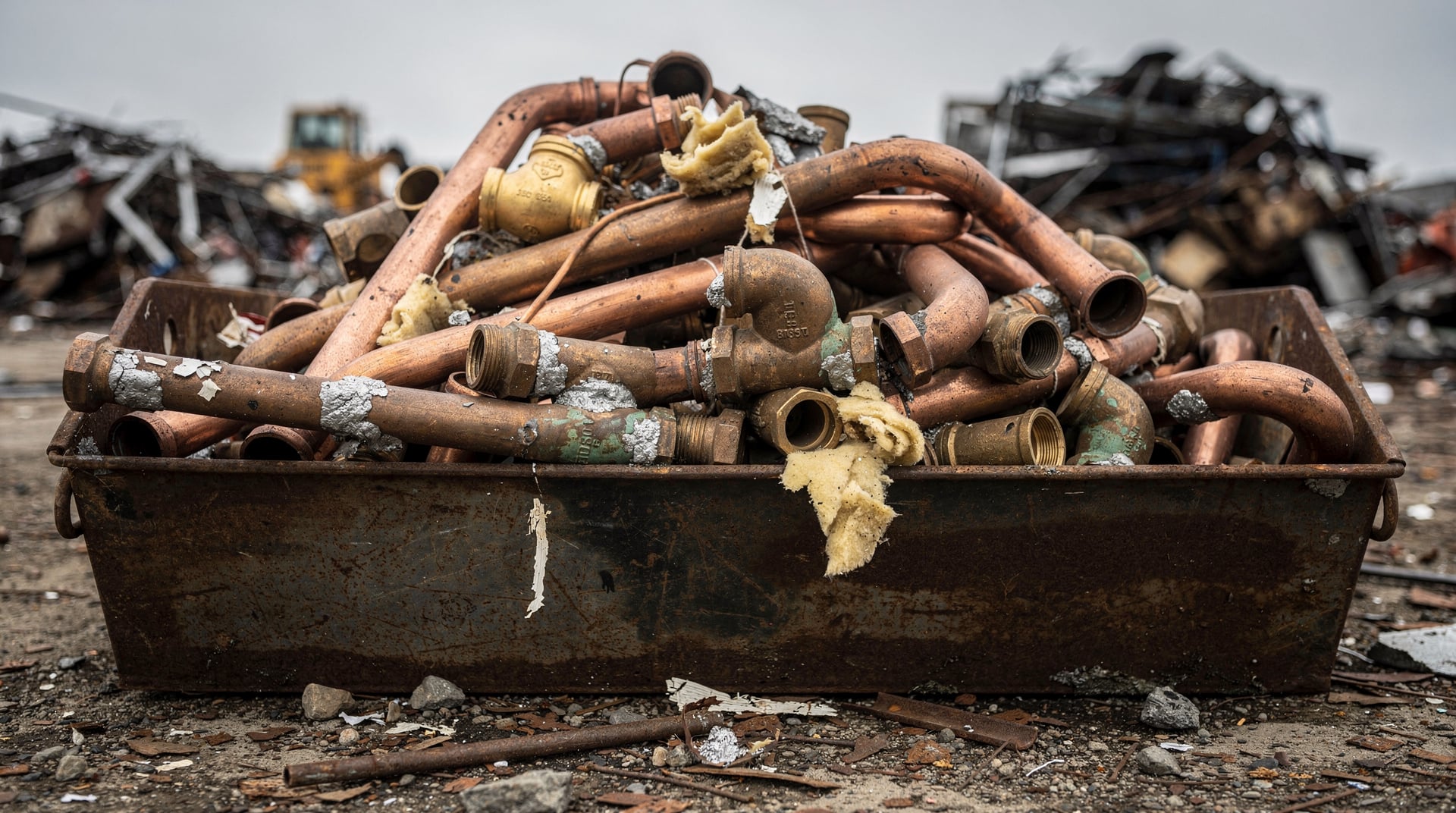
Dirty copper is copper with something on it that isn't copper. That can be solder, paint, brass or steel fittings, plastic, insulation, steel brackets, oil or dirt.
Dirty copper usually pays less than clean copper. The extra stuff has to come off before the copper can be melted. Someone has to do that work.
Yards and the mills that buy from them use grade rules from the Recycled Materials Association (ReMA), which used to be called ISRI. Those rules say metal that doesn't match its grade can be downgraded or rejected.
"Dirty" is a yard word, not a ReMA grade. You won't find a grade called dirty copper in the rules or on our list. Most dirty copper can be cleaned up at home with a hacksaw and some time.
What "dirty" means at the yard
At the yard, dirty means anything on the metal that isn't the metal. Common examples:
Solder on pipe joints
Paint or coating on pipe or wire
Brass or steel fittings still on copper pipe
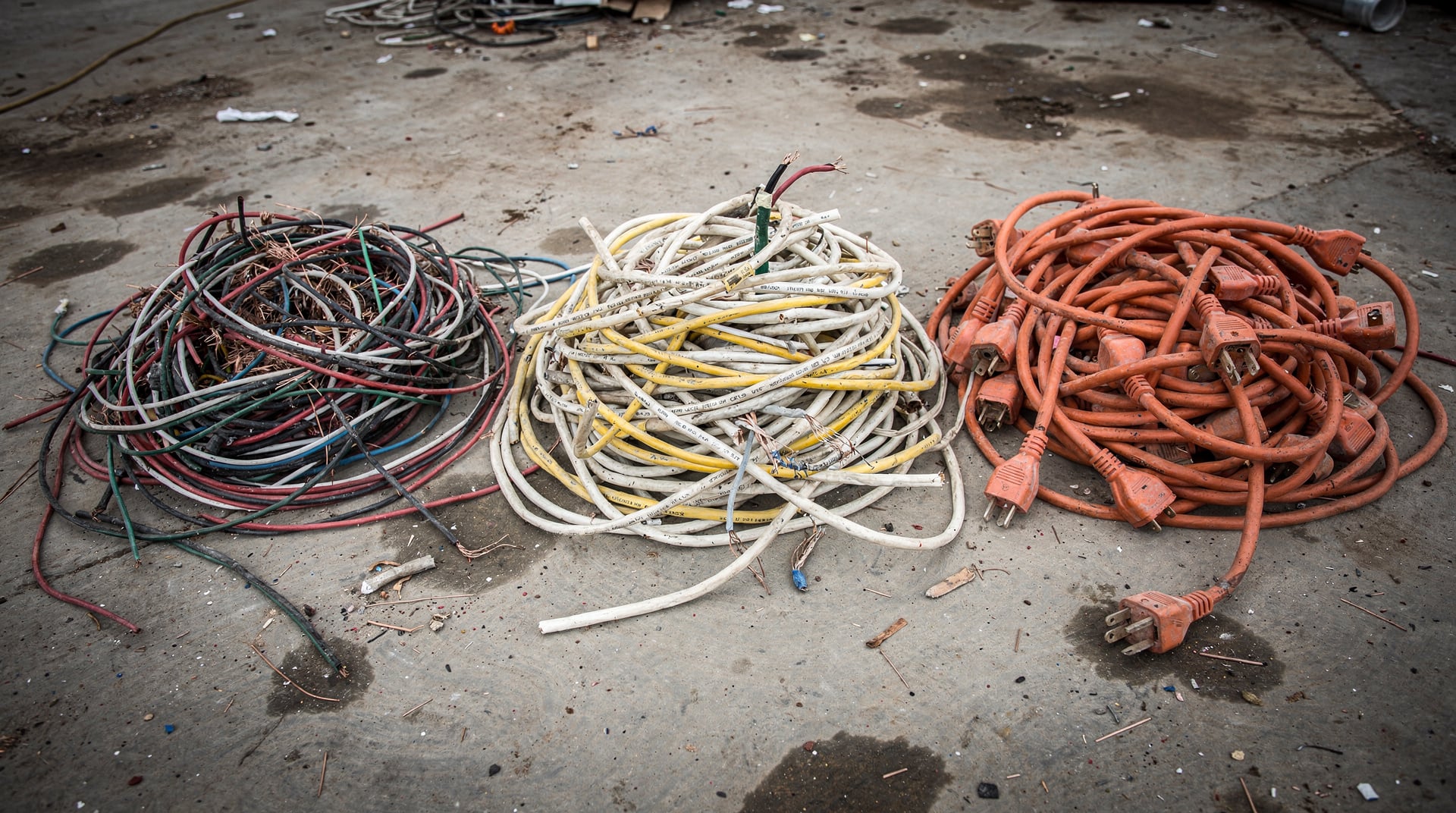
Plastic insulation or tape on wire
Steel brackets or end plates on A/C coils
Plastic handles, rubber washers and steel screws on brass faucets
Oil, dirt or sediment on pipe or packed inside it
Burned residue on wire someone burned
Tarnish is a gray area. ReMA's bare bright wire grade, Barley, leaves green wire up to the buyer and seller. Even so, some yards grade heavily tarnished wire lower than shiny wire.
Chrome or nickel plating on a brass faucet doesn't count as dirt. ReMA's faucet grade, Grape, includes plated brass. The handles and screws are what make a faucet dirty.
Coating on copper wire is different. Tinned copper wire can't be #1 wire under ReMA's Berry grade, which must be untinned and uncoated.
Dirty copper on our list
Our What We Purchase list has no line called dirty copper. Instead, each kind of dirty copper has its own line next to its clean twin.
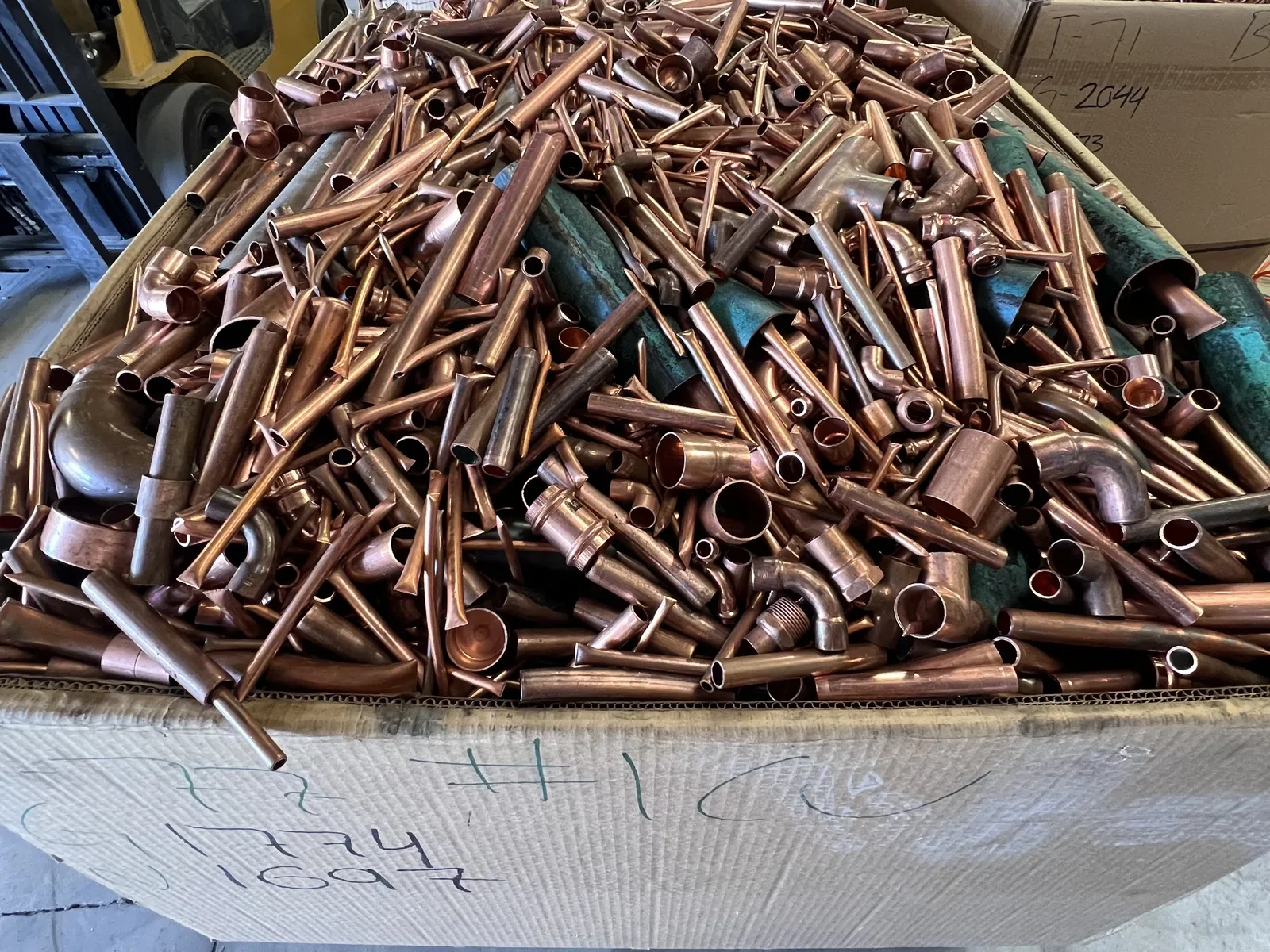
Copper pipe with solder or paint goes in #2 Copper Tubing / Bus Bar. Clean pipe goes in #1 Copper Tubing / Flashing. Our guide to #1 vs #2 copper shows where the line falls.
A/C coils with steel on them go in Aluminum/Copper Coil (Dirty) or Aluminum/copper coils with steel still attached. With the steel off, they go in Aluminum/Copper Coil (Clean). Ask at the counter which dirty coil line fits yours.
Brass faucets with plastic, rubber or steel parts go in Dirty Brass Faucets. Stripped down, the brass may grade as Brass (Plumbing, Pipe).
Copper wire with plastic on it goes in Insulated Wire, Romex Wire, THHN Cable or one of our other insulated lines. Stripped, clean and shiny, it can go in #1 Bare Bright Wire.

At our Harrisburg yard, insulated wire was the biggest single grade by weight from June 25 to Sept 24, 2026.
Our lines don't match ReMA's word for word. If you aren't sure which line a piece fits, ask us at the counter.
How to clean it up, by type
Copper pipe
Cut brass fittings and valves off with a hacksaw or a tubing cutter.
Put them in a brass pile, since brass has its own line.
Cut out the soldered joints.
Put the clean pipe between the joints in your #1 bucket.
Put pipe that still has paint or solder on it in your #2 bucket.
ReMA's #2 pipe grade, Cliff, rules out pipe with connections that aren't copper. Some yards still take pipe with small brass joints as #2. Cutting the brass off avoids the question.
Copper wire
Strip the wire if you have the time. Bare, shiny copper wire is the top grade. Wire with the plastic still on is graded by how much copper is inside.
Never burn the plastic off. Pennsylvania bans open burning in Harrisburg and the state's other air basins. A state fact sheet says the household trash exception doesn't cover wire coating. Cumberland County hosts a copy of it. Texas rules say electrical insulation must not be burned.
Burning also costs you the grade. ReMA's #1 wire grade, Berry, must be free of brittle, burned wire. Its #2 wire grade, Birch, rules out wire from burning.
Thin wire can still be bare bright. Barley no longer sets a 16-gauge minimum. Wire size is up to the buyer and seller. Older guides online still say bare bright must be 16 gauge or thicker.
Stripping thin wire takes a long time for a little copper. Our guide to insulated copper wire grades covers when stripping is worth your time.
A/C coils
Deal with the refrigerant first. On a central A/C unit, the refrigerant has to be recovered under EPA's servicing rules before the unit is scrapped. Under 40 CFR 82.161, the person who recovers it must be a certified tech. Call an HVAC tech for that step.
Don't cut the lines to let it out. 40 CFR 82.154 says no one disposing of an appliance may knowingly vent or otherwise release its refrigerant into the environment.
Once the refrigerant is out, take off the steel. Unbolt or cut away the steel end plates and brackets. That can move a coil from dirty to clean. ReMA's coil grade, Talk, must be "free of brass tubing, iron and other foreign contamination."
Roofing copper
Pull out nails, screws and steel clips. ReMA's grade for gutters and sheet copper, Dream, must be free of excessive iron. Keep gutters, flashing and sheet apart from pipe, since our list has its own line for Roofing Copper.
Brass faucets
Take off the plastic handles, rubber washers and steel screws. What's left may be brass you can sell as plumbing brass.
Check what the faucet is made of. Some newer faucets are mostly plastic or zinc die-cast parts. ReMA's Grape grade must be free of zinc and aluminum die-cast parts.
Brush off grime with mild soap and water. Skip harsh chemicals.
Stay safe while you clean
Wear gloves and eye protection. Cut pipe and sheet metal edges are sharp.
Use the right tool for the job, and keep it in good shape. OSHA's guide to hand and power tools says to inspect tools before use and wear protective gear.
Watch out for old solder. Since June 1986, solder in drinking water plumbing has been limited to 0.2% lead. Pipe put in before then may have solder with a lot of lead in it. Wash your hands after you handle it, and before you eat.
When to bring it in dirty
Cleaning isn't always worth it. A few feet of pipe or one faucet may not pay back the time it takes. If you have a small amount, bring it in as it is.
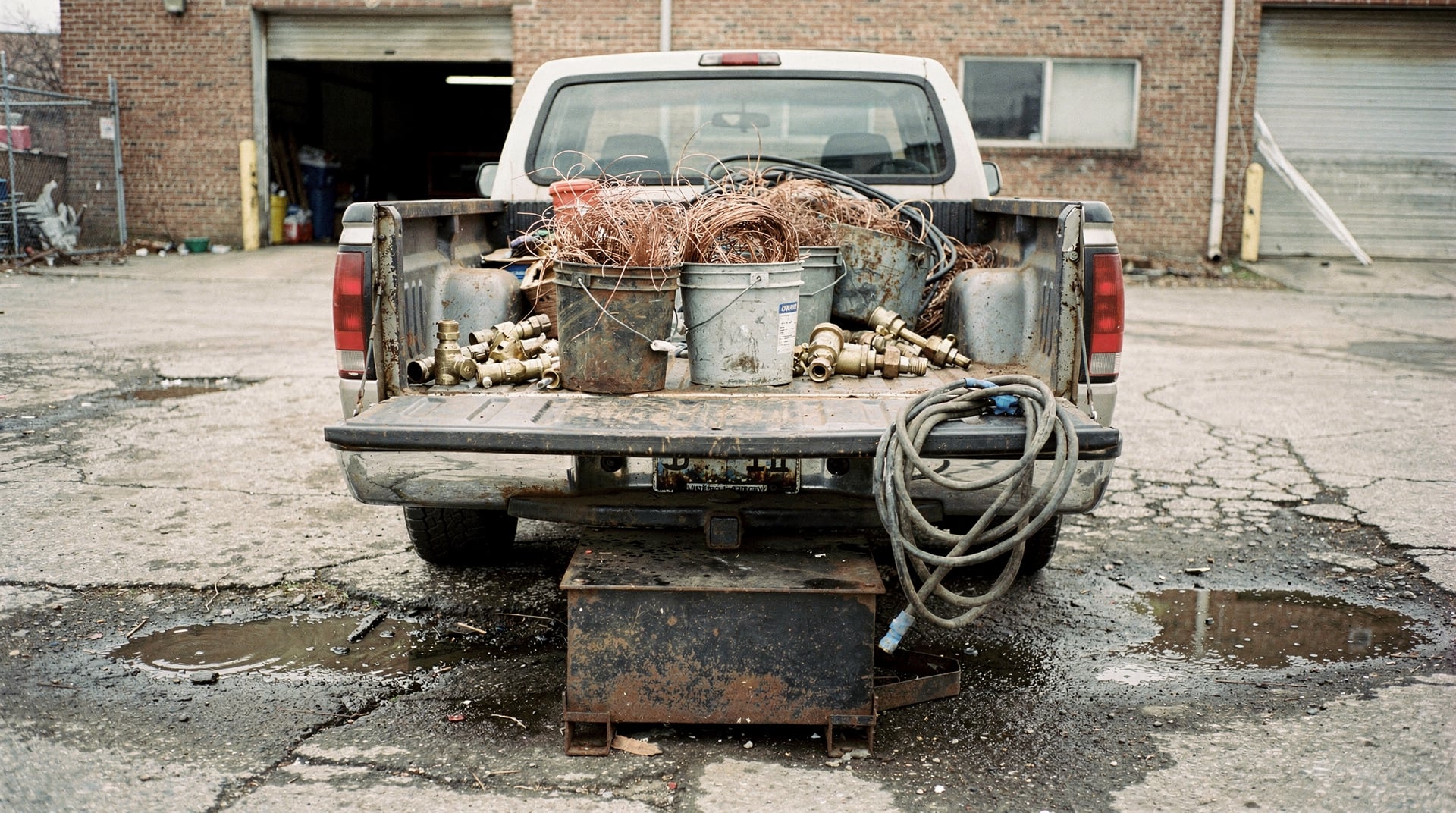
Just keep dirty and clean copper apart. Put each kind in its own bucket. That way each grade gets weighed on its own, and your clean copper isn't mixed in with the dirty.
Bring your copper to us
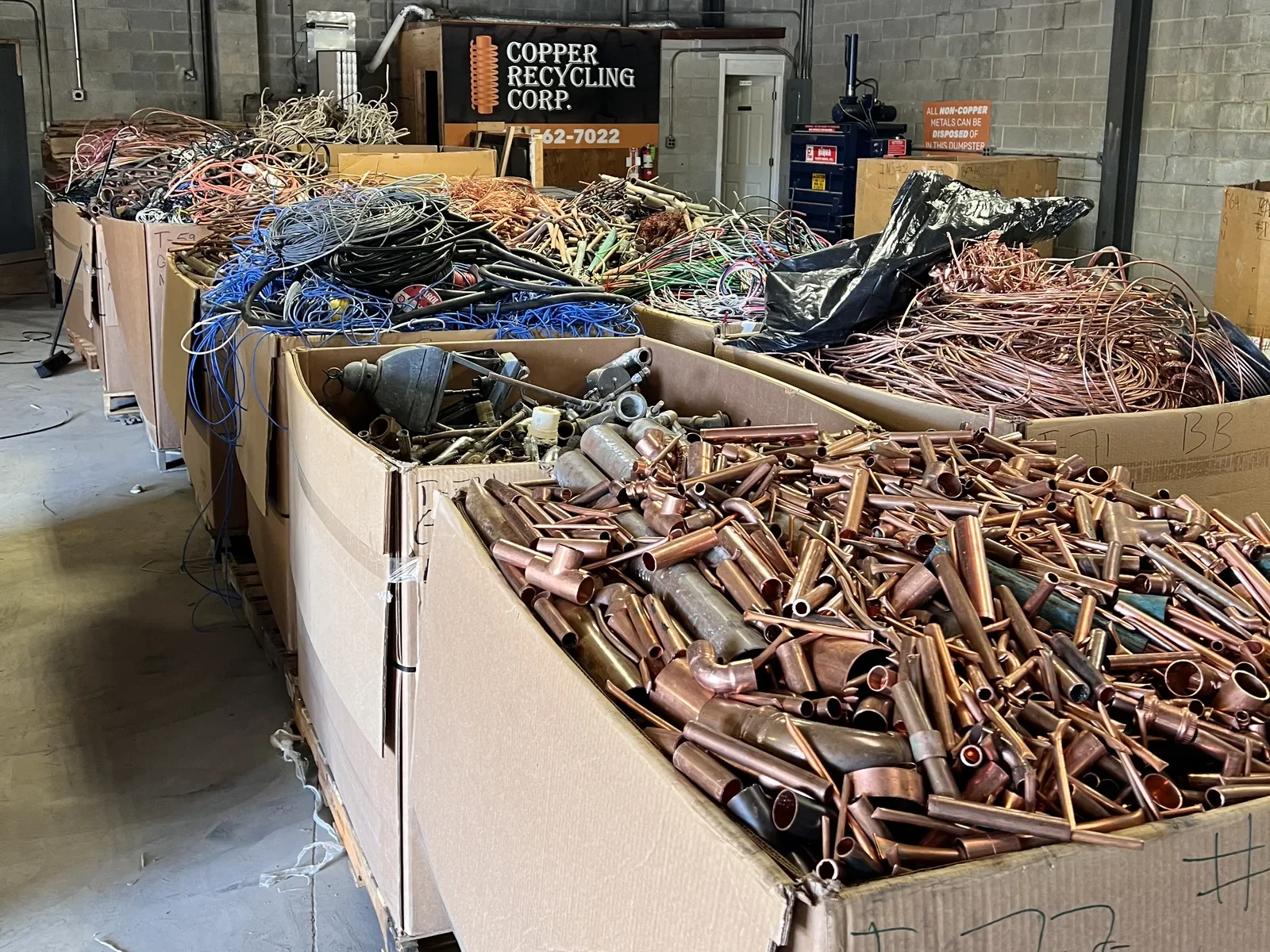
Clean up what's worth it, then bring it to our Harrisburg yard at 916 S 18th St, Harrisburg, PA 17104. It's open Monday to Friday 9 AM to 6 PM and Saturday 9 AM to 3 PM. You can call (717) 562-7022.
In Texas, visit our Corpus Christi yard at 3717 Saturn Rd, Corpus Christi, TX 78413. Call (361) 462-4387 first to check the hours and how you'll be paid.
Questions
What is #1 and #2 scrap copper?
#1 is clean copper with nothing on it. #2 still has a little solder, paint or coating left on. Dirty copper with fittings, plastic or heavy solder can fall below #2 until you clean it up.
Is scrap copper wire worth anything?
Yes. Bare copper wire is graded #1 or #2, and wire with the plastic still on is bought too. ReMA's insulated wire grade, Droid, is sold "on a sample or recovery basis." That means its value depends on how much copper comes out of it.
Who pays more for scrap copper?
Prices change every day and differ from yard to yard, so we don't post ours here. The part you control is the grade. Each piece you clean up can move from a dirty line to its clean twin, and clean copper usually brings more per pound.