
Key points
- #1 copper is clean, bare copper with no solder, paint, coating or plastic.
- #2 is plain copper with a little solder, paint or coating, and tests about 96% copper.
- Cut off brass and soldered joints, and keep each grade in its own bucket.
In this guide
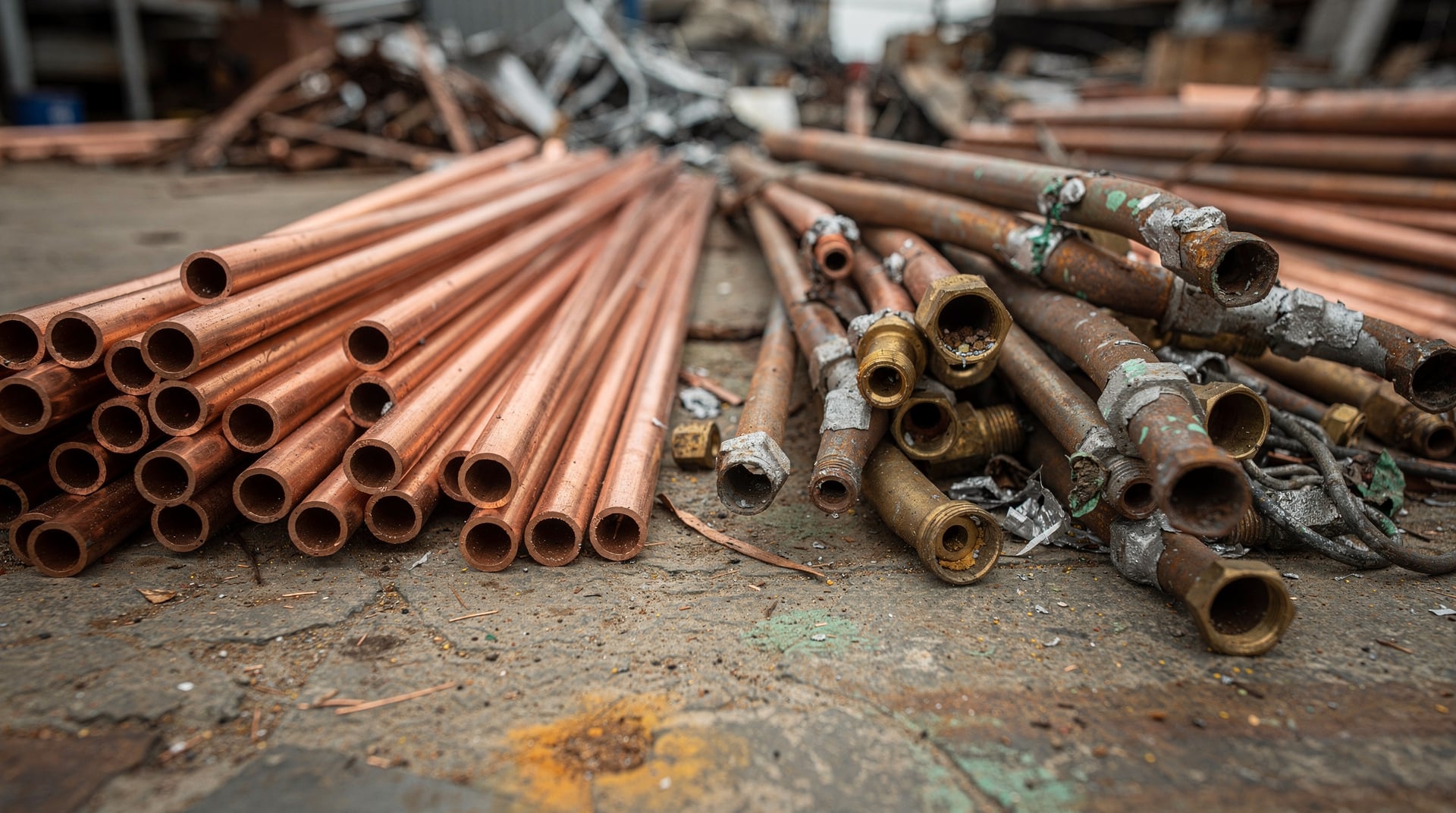
#1 copper is clean, bare, uncoated copper: stripped wire, clean pipe and solid pieces with nothing on them. #2 copper is still plain, unalloyed copper, but it has some solder, tin, paint or a coating on it. It should test at about 96% copper, and never under 94%.
The grade matters because #1 brings more per pound than #2. Some sorting at home can move part of your copper up a grade.
Copper is most of what our Harrisburg yard buys. From June 25 to Sept 24, 2026, copper in some form was 71% of the pounds and 94% of the dollars.
Where the grades come from
Many U.S. yards and mills use one shared set of grade rules. A trade group called the Recycled Materials Association (ReMA) publishes them. The group was called ISRI until April 2024, when it became ReMA. That's why you still hear people say "ISRI grades."
The rules are in ReMA's scrap specifications circular, posted on isrispecs.org. Each grade has a one-word code name. Barley, Berry and Candy are #1 copper grades. Birch and Cliff are #2.
The current wording for these copper grades took effect July 14, 2022. Later revisions to the circular didn't change them.
The specs aren't a law. ReMA's About page says a buyer and seller may agree in writing to their own variations, so each yard draws its lines a little differently.
What counts as #1 copper
ReMA has three #1 copper grades.
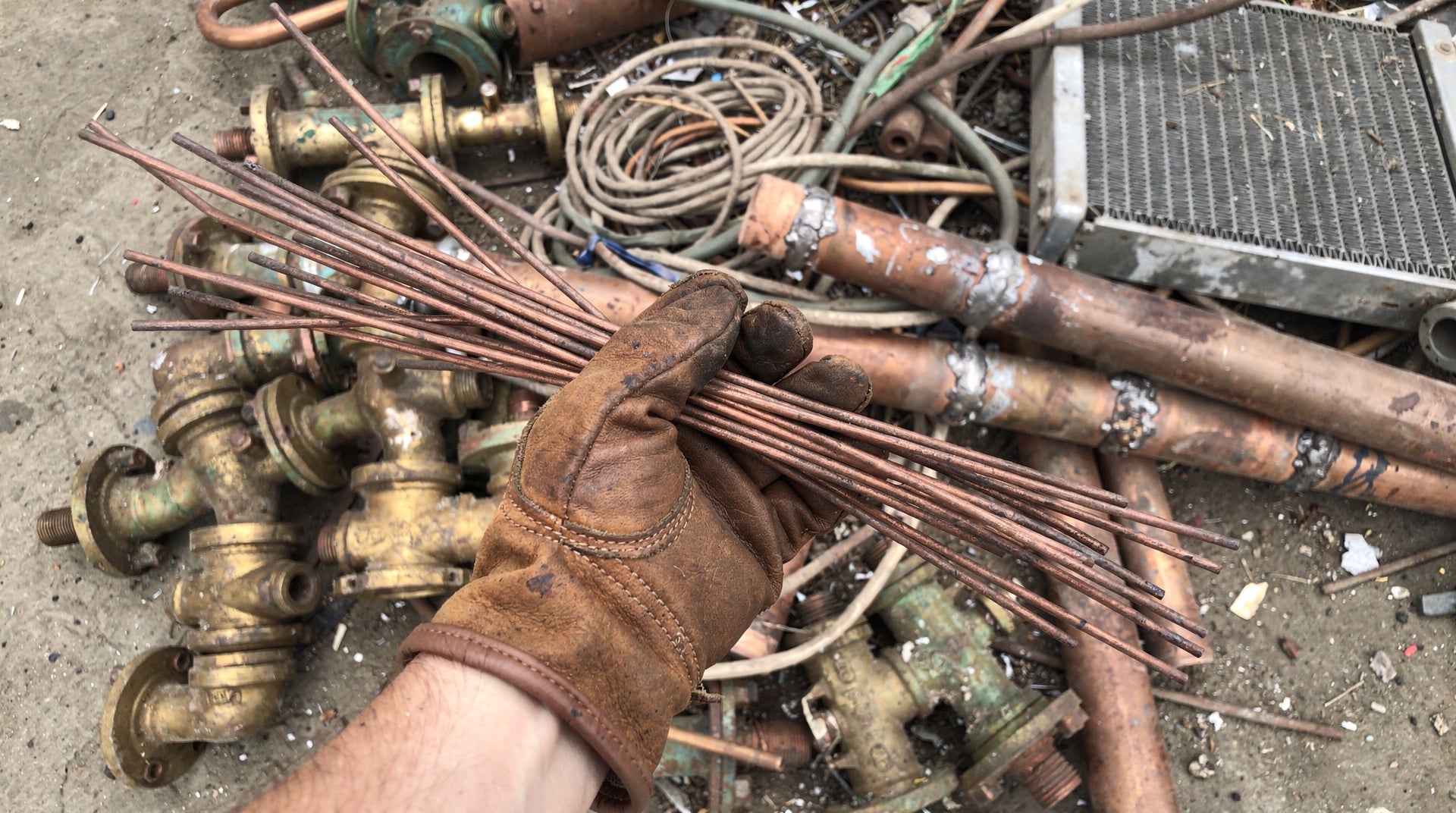
Barley: bare bright wire. Bare, uncoated, unalloyed copper wire: shiny stripped wire with nothing on it.
Berry: #1 copper wire. This is clean copper wire and cable that isn't tinned, coated or brittle from burning, with no pipe mixed in.
Candy: #1 heavy copper solids and tubing. Clean, uncoated copper clippings and punched pieces, bus bars and clean copper tubing: clean pipe and solid chunks.
"Unalloyed" means plain copper. Brass and bronze are alloys, which means copper mixed with other metals.
Neither #1 wire grade sets a smallest wire size. Barley and Berry both say wire gauge is "subject to agreement between buyer and seller."
What makes copper #2
Birch is #2 wire. Cliff is #2 solids and tubing. Both must be unalloyed copper with "a nominal 96% copper content (minimum 94%)" by lab test. Nominal means that's the usual target.
#2 is where copper goes when it isn't clean enough for #1. Yards commonly put these in #2:
Pipe with some solder left on the joints
Painted pipe or painted wire
Tinned wire, which looks silver instead of copper colored
Copper with a coating or a little oil on it
#2 still has limits. Birch and Cliff both say the copper must be free of:
Too much lead, tin or solder
Brass and bronze
Too much oil, iron or non-metal material
Wire that was burned to get the insulation off
Insulation, hair wire (very fine strands) and brittle, burned wire
Cliff also rules out tubing with non-copper connections or sediment inside.
Mix-ups older guides repeat
Many guides online repeat rules that ReMA's current text doesn't say.
"#1 wire must be 16 gauge or thicker." Barley and Berry leave gauge to the buyer and seller. The 16-gauge line shows up in Clove, a grade for chopped wire nodules, not whole wire.
"#1 copper is 99% copper." ReMA gives no copper percentage for #1 wire, pipe or solids. The 99% figure also comes from Clove.
"Bus bar is bare bright." Bare bright is wire only. ReMA lists clean bus bars under Candy, with heavy copper.
"A brass fitting is fine in #2." Cliff says #2 must be free of brass and of tubing with non-copper connections.
Copper that's neither #1 nor #2
Light copper. ReMA's Dream grade covers sheet copper, gutters, downspouts, kettles and boilers. It runs a nominal 92% copper, with an 88% minimum.
Brass fittings and valves. These are brass, an alloy, not plain copper.
Burned wire. Berry rules out brittle, burned wire. Birch and Cliff rule out wire from burning.
Insulated wire. Wire with the plastic still on is sold by how much copper is inside. It was the biggest single grade by weight at our Harrisburg yard in that same period.
How ReMA's grades line up with our four copper lines
Our What We Purchase list has four copper lines. Here's how they roughly match ReMA's grades.
#1 Bare Bright Wire: Barley.
#1 Copper Tubing / Flashing: Candy, which means clean pipe and solids.
#2 Copper Tubing / Bus Bar: Cliff, which means #2 pipe and solids.
Roofing Copper: closest to Dream, ReMA's light copper.
Our list puts bus bar on the #2 line, but ReMA puts clean bus bar in Candy. Our list puts flashing on the #1 tubing line, but ReMA's light copper covers sheet copper. We also have no separate line for Berry or Birch wire. Ask where clean wire that isn't bright, or tinned or painted wire, goes.
Brass fittings go on our Brass (Plumbing, Pipe) line. Insulated wire has its own lines. When you aren't sure where a piece fits, ask at the counter.
Sort it at home
Pull out any wire with plastic still on it. Keep it in its own pile.
Set aside bare, shiny wire with no tin or coating. That's bare bright.
Keep stripped wire that's dull, tinned or painted in its own pile. Ask at the counter where it goes.
Cut off brass fittings and valves. Brass looks more yellow than copper. Put it in a brass bucket.
Cut out soldered joints. Put the joints in your #2 pipe bucket and the clean pipe between them in your #1 pipe bucket.
Put clean pipe and solid pieces with nothing on them in that #1 pipe bucket too.
Put pipe with paint or leftover solder in the #2 pipe bucket.
Keep sheet copper, gutters and roofing copper apart from pipe. Our list puts flashing on the #1 tubing line, so ask where yours goes.
Don't burn wire to get the plastic off. Strip it, or sell it as insulated wire.
Why the grade changes your pay
Many yards watch COMEX, a U.S. futures market where copper trades.
In July 2025, Fastmarkets, a company that reports metal prices, wrote that US copper scrap prices are "currently assessed as a discount to the most-active traded COMEX copper contract." It reports #1 and #2 separately, and in that report the #2 discount was the bigger one.
The numbers below are made up to show the math. They aren't our prices or anyone else's.
Made-up example: Say COMEX copper is $5.00 a pound. Say a yard pays 80% of that for #1 and 70% for #2. #1 would bring $4.00 a pound, and #2 would bring $3.50. Moving 40 pounds from #2 to #1 would add $20.
Real discounts move with the market and differ by yard. To see how copper stacks up against other metals, read what the highest paying scrap metal is right now.
Bring your sorted copper in
We pay top dollar for copper. Bring each grade in its own bucket, so each one is weighed on its own.
Harrisburg, PA: Visit our Harrisburg yard at 916 S 18th St, Harrisburg, PA 17104. It's open Monday to Friday, 9 AM to 6 PM, and Saturday, 9 AM to 3 PM. Call (717) 562-7022.
Corpus Christi, TX: Visit our Corpus Christi yard at 3717 Saturn Rd, Corpus Christi, TX 78413. Call (361) 462-4387 first for hours.
Questions
How much is #1 and #2 copper?
Both follow the copper market, so prices change often, and we don't post them here. #1 brings more per pound than #2, because #2 takes a bigger discount from COMEX.
What is dirty copper?
Dirty copper is copper with something else on it, like solder, paint, fittings, plastic or grime. A lot of it can still sell as #2. Copper with brass, heavy solder or insulation on it falls outside #2 until you clean it up.
Who pays more for scrap copper?
Prices change often and differ from yard to yard. The parts you control are the grade and the sorting. When you compare yards, ask how each one grades your load, since #1 brings more per pound than #2.
Can I sell burned copper in Texas?
In some cases, yes, but with extra rules. Texas law counts wire burned to strip its insulation as "regulated metal," which brings extra ID and record checks. A yard also commits an offense if it knowingly buys burned communications wire without papers showing it was salvaged from a fire. This is a plain summary, not legal advice, so call our Corpus Christi yard before you bring any in.