
Key points
- The news price is COMEX, for about 99.99% pure cathode in 25,000 lb lots.
- Scrap pays a share of it after melting, refining, freight and handling.
- Clean, sorted grades are the part of your price you control.
In this guide
The copper price on the news is the COMEX price for pure refined copper cathode, sold 25,000 pounds at a time. Your scrap isn't that yet, so a yard pays a share of it.
That gap isn't a trick. Your scrap has to be sorted, shipped, melted and refined before it can become new copper. Each step costs money. That cost comes out before a price reaches you.

What COMEX is
COMEX is the metals market run by CME Group. Traders there buy and sell copper futures. A future is a deal to buy or sell metal at a set price on a later date.
COMEX quotes copper in U.S. dollars and cents per pound. U.S. business news often quotes this number. It changes every trading day.
London has another big copper market, the London Metal Exchange, or LME. It prices copper by the metric ton, not by the pound. So a news story from London may show a number that looks far bigger than the U.S. one.
The price moves from year to year, too. The U.S. Geological Survey says COMEX copper averaged $4.22 a pound in 2024. For 2025, it estimated a record average of about $4.80 a pound. That's a jump of about 14% in one year.
We won't give a current COMEX number here. It would be out of date by the time you read this. You can see today's number on CME Group's website or in financial news.
The number on the news is for refined cathode
The COMEX price is for copper cathode. Cathode is a flat plate of copper made at a refinery. The USGS says cathode is about 99.99% pure.
COMEX sets the grade, too. Its contract calls for Grade 1 copper cathode under ASTM B115. ASTM B115 is a standard for pure copper cathode. One contract is 25,000 pounds of it. That's 12.5 U.S. tons of some of the purest copper made.
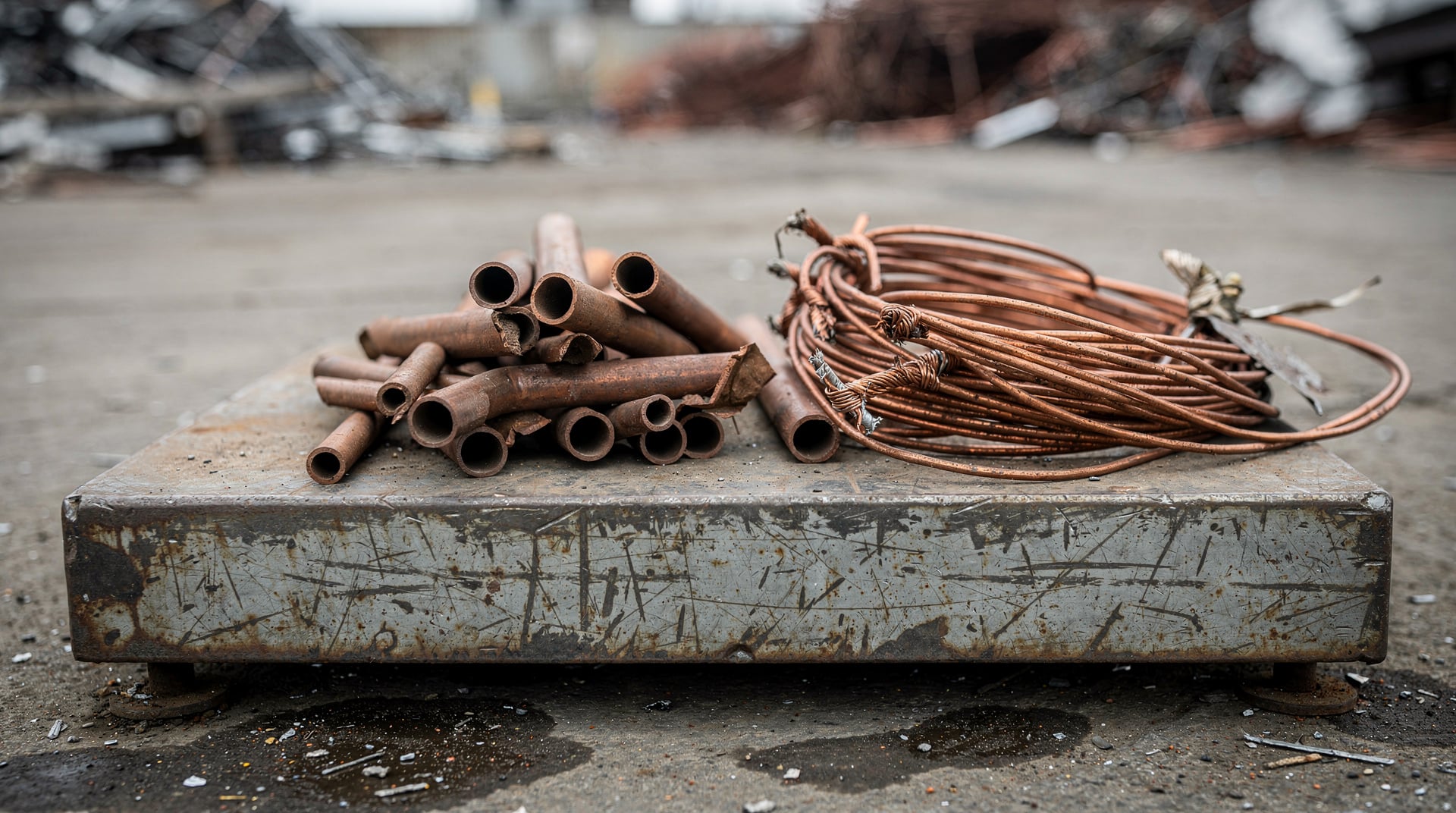
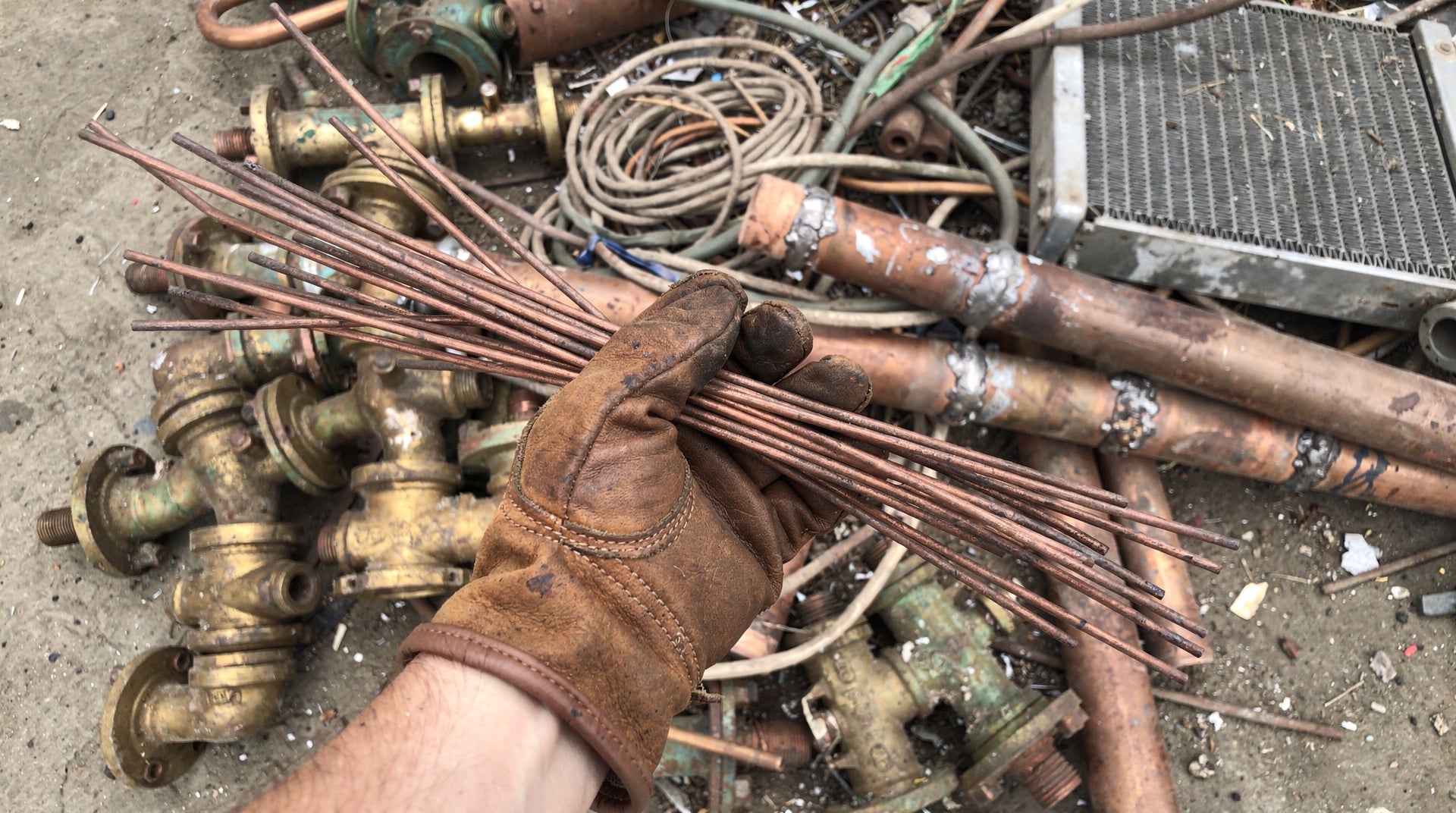
Your scrap is different. It might be old pipe with solder on it. It might be wire inside a plastic jacket. It might be a brass faucet that is part zinc. None of it is cathode yet.

Scrap itself isn't traded on COMEX or the LME. The USGS says scrap is priced up or down from the exchange price of refined copper. So the news number is the starting point, and yards watch it. In one 2025 market report, even No. 1 copper sold to mills below it, as you'll see below.
Why a yard pays a share of it
The USGS lists what sets a scrap price. It names local supply and demand, the cost to turn scrap back into metal, freight, and the prices of the metals inside the scrap. Each one moves the price. The sections below show where each piece of the gap comes from.
Copper content
Most scrap isn't all copper. The USGS gives the average copper content of common scrap types in Table 5 of a 2009 USGS copper report:
No. 1 copper: about 99.5% copper
No. 2 copper: about 96.8% copper
Heavy yellow brass: about 66% copper
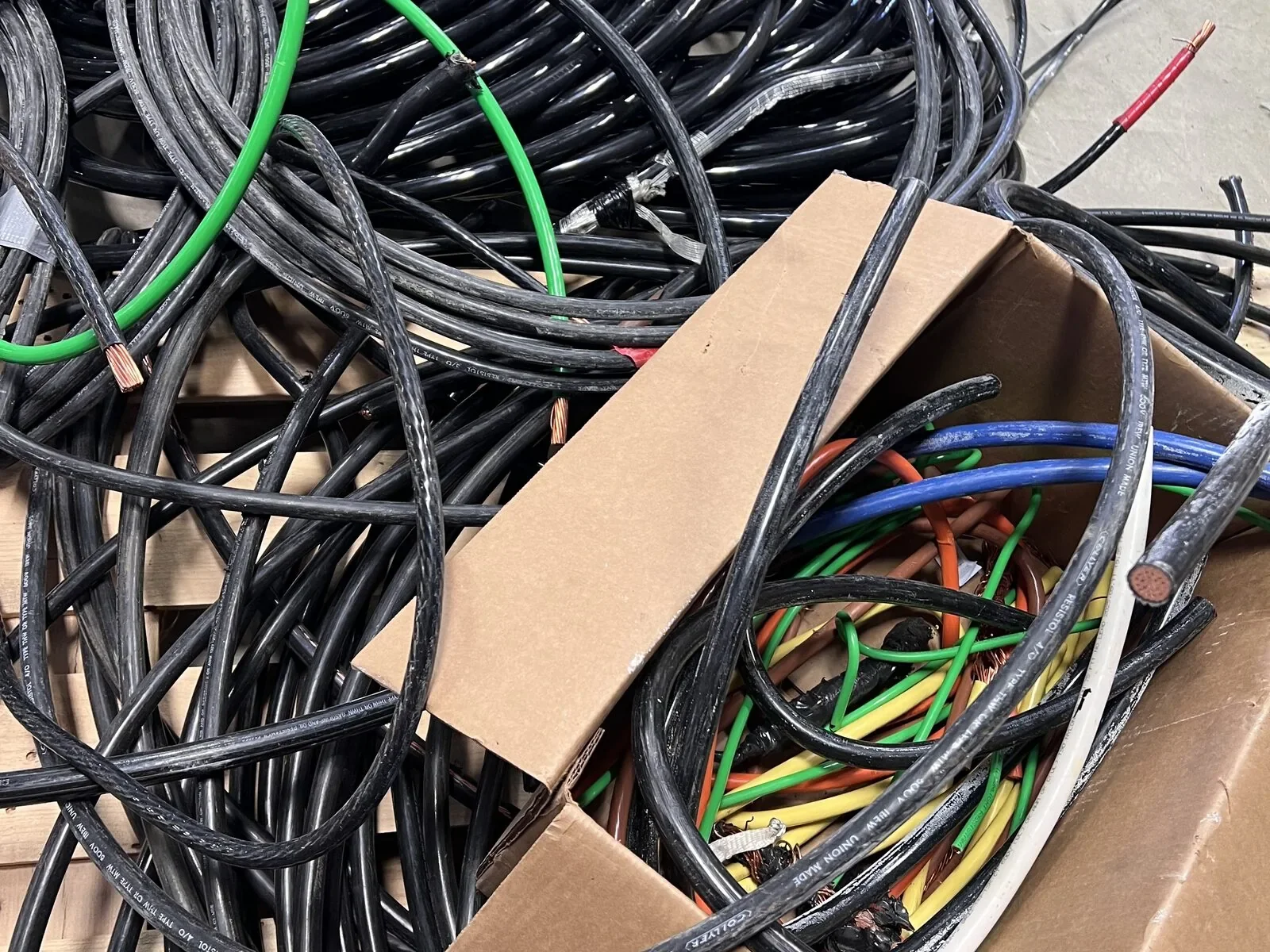
Insulated wire is about 60% metal and 40% plastic, by the USGS figure. The plastic has to come off before the copper can be used. A buyer pays for the metal, not the plastic. That matters here: at our Harrisburg yard, insulated wire was the biggest single grade by weight from late June to late September 2026.
Melting loss
Scrap has to be melted to become new metal. Some of the metal is lost in the melt. That lost metal is part of the cost to turn scrap back into copper.
Refining
Clean No. 1 copper can go to brass mills and wire rod mills. No. 2 copper goes to fire refiners and ingot makers, the USGS says. Fire-refined copper is about 99% pure. It's often refined again to make cathode.
Old scrap, like wire pulled from a building, needs even more work. The USGS lists hand sorting, stripping, shredding and magnet separation.
Freight
A yard doesn't turn scrap into cathode. It trucks the scrap to a mill or refinery that can. Fuel, trucks and drivers cost money. A full load costs less a pound to ship than a half-empty one.
Grade and dirt
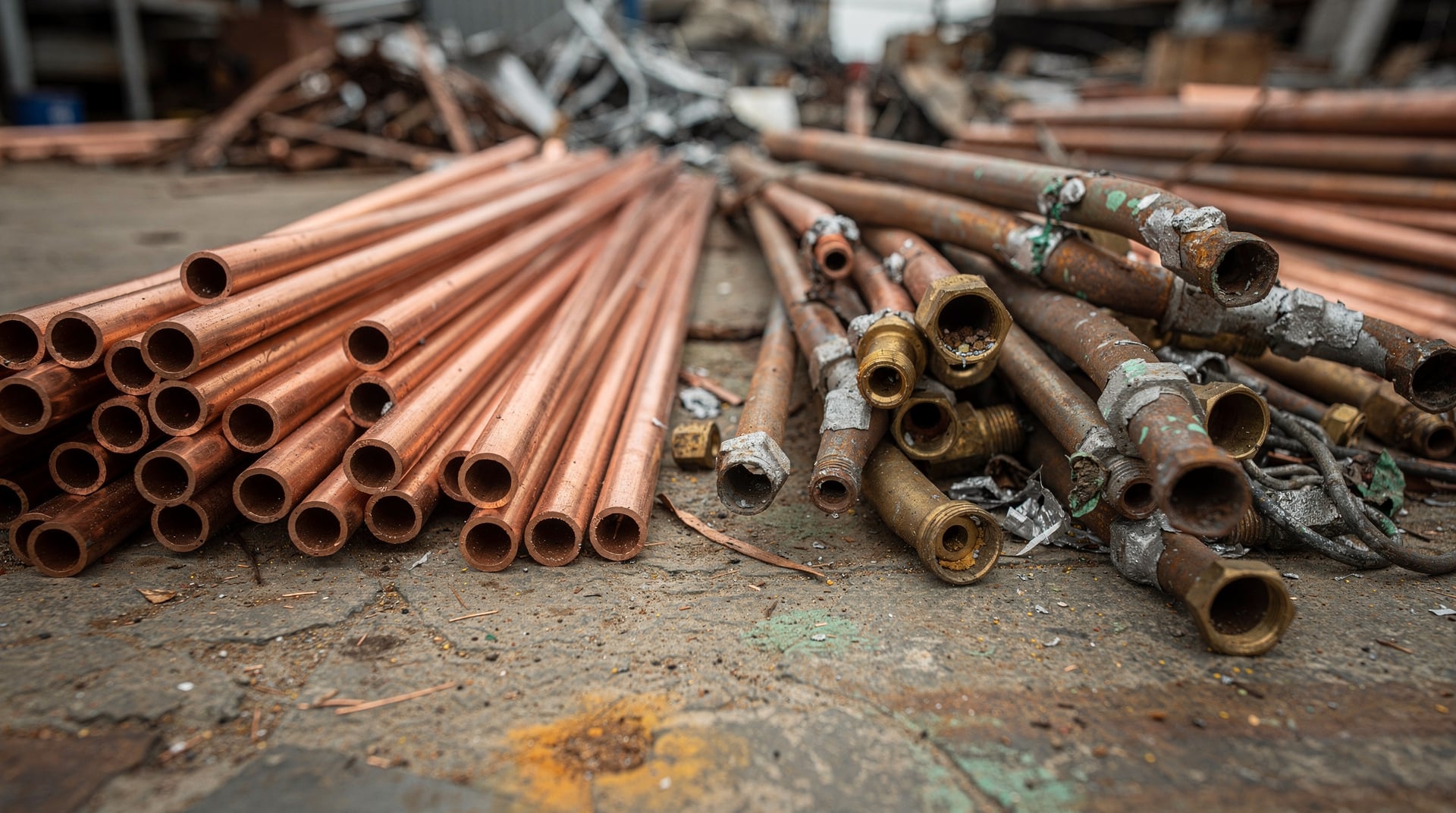
Steel screws, solder, plastic and paint all lower the grade. A mill can't use a steel fitting to make copper. So a mixed or dirty load often pays at a lower grade than its cleanest part.
Volume
Mills and refiners buy by the truckload. A homeowner might bring in a bucket or a truck bed. A yard gathers many small loads to fill one big one. That work takes time and space.
The yard's own costs
A yard pays for scales, staff, trucks, rent and power. The USGS notes that collecting, processing and shipping scrap has to leave a profit margin for whoever does the work. Without that margin, no one could keep a yard open.
Even big mills buy below COMEX
The discount starts before the yard. Fastmarkets, a metals price service, tracks what mills pay for scrap against COMEX. On July 9, 2025, it put No. 1 copper delivered to brass mills at 78 to 83 cents a pound below COMEX. On the same day, it put No. 2 copper delivered to brass ingot makers at $1.25 to $1.30 a pound below COMEX. No. 2 needs more refining. These are mill prices, not yard prices. So on that day, even mills paid less than the news number for clean scrap.
A made-up example
Here is how the math starts. The numbers below are made up.
Made-up example: say COMEX is at $5.00 a pound. This is not today's price, and it is not a price we pay. Heavy yellow brass is about 66% copper, so 10 pounds of it holds about 6.6 pounds of copper. At $5.00 a pound, that copper is worth about $33 on paper. That's before melting loss, freight, refining and handling come out.
The math works the same way at any COMEX price. What you get depends on the grade, how clean the metal is, and the costs above. That's why yards watch COMEX and pay within a range of it, set by grade and cost.
What you can control
You can't move COMEX. You can control what you bring in.
Sort by metal. Put copper, brass and insulated wire in their own piles.
Keep copper grades apart. Bare bright, No. 1 and No. 2 are trade grades. ReMA's grade definitions set them out. ReMA is the recycling trade group.
Pull off steel and brass ends. Take screws, clamps and brass fittings off copper pipe where you can.
Strip wire only when it pays. Stripping takes time. Weigh your time against the gap between the insulated price and the bare price.
Ask on the day you sell. Prices move every trading day, so last week's number won't tell you much.
Call or visit our Harrisburg yard at 916 S 18th St, Harrisburg, PA 17104, (717) 562-7022. It's open Monday to Friday, 9 AM to 6 PM, and Saturday, 9 AM to 3 PM. Or call or visit our Corpus Christi yard at 3717 Saturn Rd, Corpus Christi, TX 78413, (361) 462-4387. Call first to check its hours. Both yards buy copper, brass, insulated wire, coils, radiators and electronics. Car batteries and lead are Harrisburg only. Steel, iron and aluminum cans aren't on our list. Tell us what you have when you call.
Questions
How much is a pound of scrap copper today?
It depends on the grade and on that day's COMEX price. Yards pay within a range of COMEX, and cleaner grades with more copper sit higher in that range. What each grade pays is set on the day you sell. To work out a rough number yourself, see How much is 1 lb of scrap copper worth? How to work it out.
What pays the most at a scrap yard?
Of the metals most people bring in, clean copper pays more than brass or wire with plastic on it, because it holds the most copper. By the USGS figures above, No. 1 copper is about 99.5% copper and heavy yellow brass about 66%. Our guide to the highest paying scrap metal lays out the full order.