
Key points
- Start with the day's COMEX copper price, which is quoted by the pound and changes every trading day.
- Clean grades get a bigger share of that price than dirty ones, so sort before you sell.
- Weigh each grade on its own, then call the yard for today's price on each one.
In this guide
A pound of scrap copper is worth a share of the day's copper market price, and the grade of your copper sets how big a share. Clean bare copper wire gets the biggest share, and dirty pipe and insulated wire get less.
You can work out a fair estimate in four steps. Find the market price, know your grade, find the share for that grade, and weigh what you have. Then call the yard for today's real number.
Step 1: Find today's COMEX copper price
COMEX is the U.S. exchange that sets the copper price most yards watch. Its price is quoted by the pound, and it changes every trading day. CME Group, which runs COMEX, shows it on its copper page. Most finance sites show it too, often as "copper futures" or "HG."
That price is for refined copper traded in big lots. Nobody pays it for a bucket of scrap. Think of it as the ceiling your copper is measured against.
Step 2: Know your grade
The grade is the part of the price you control. Yards use grade names from ReMA's ISRI Specifications, the trade's rule book for scrap.
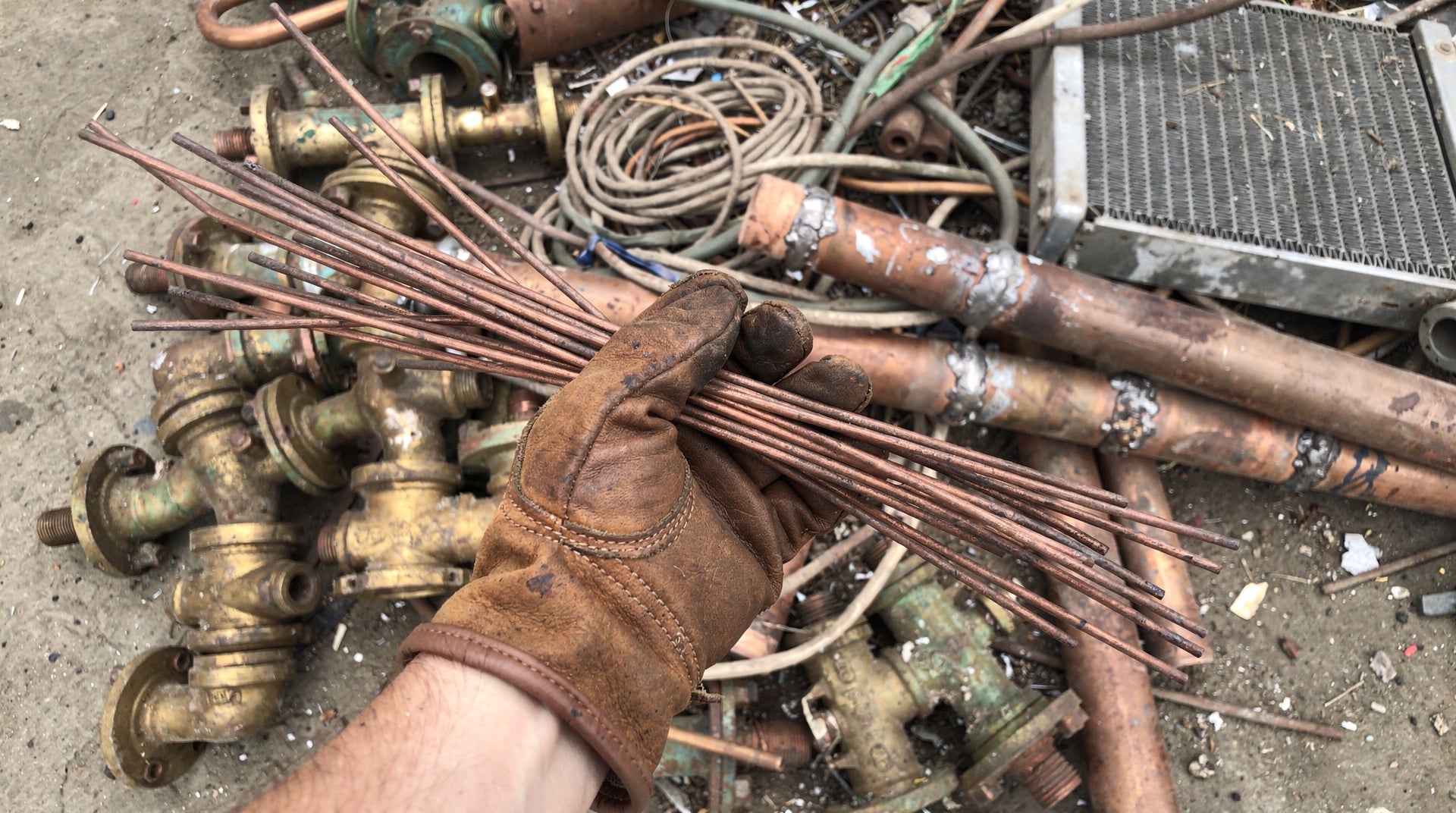
Bare bright is bare, uncoated copper wire. It has no paint, tin or insulation. It is the top grade.
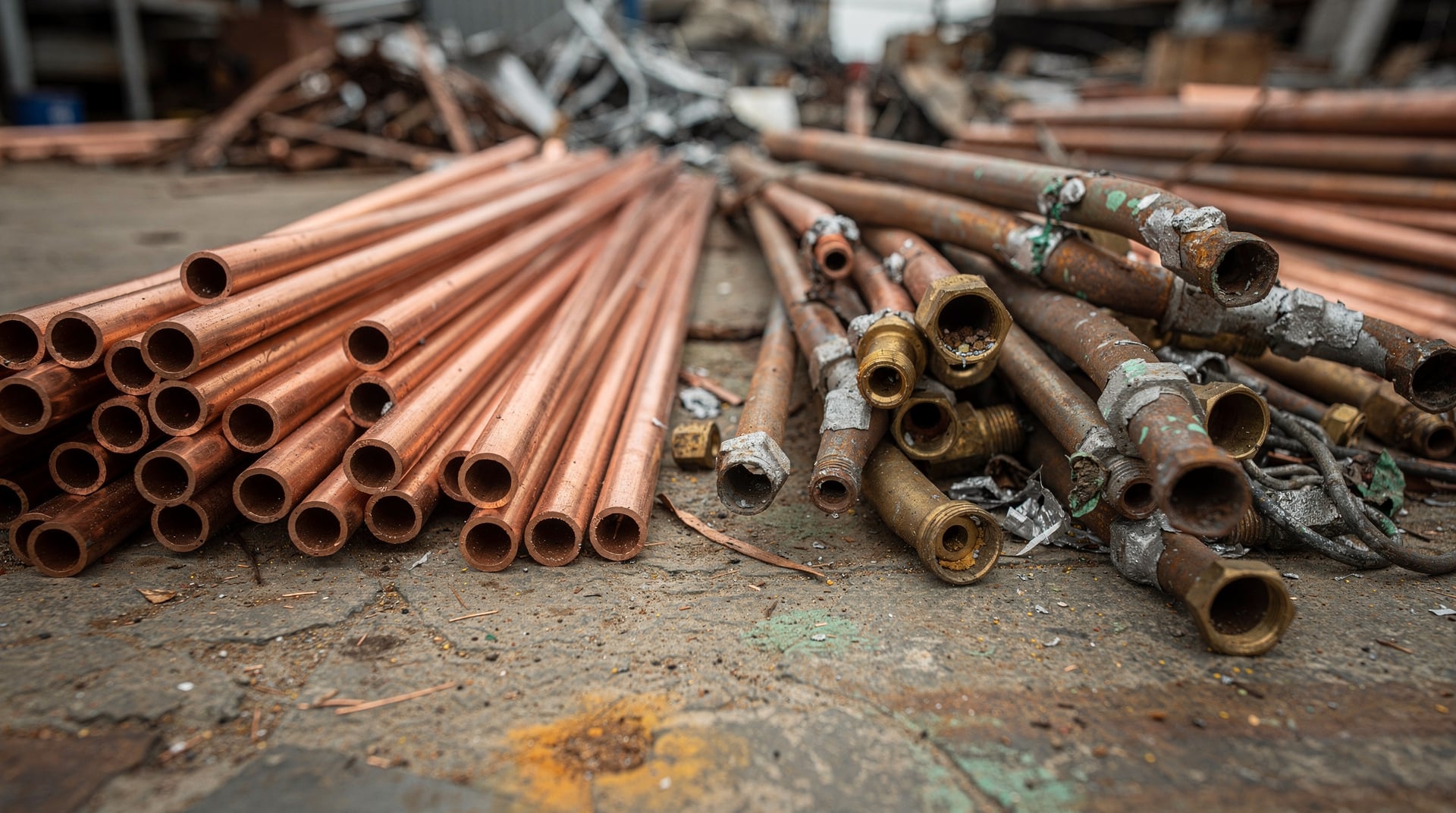
#1 copper is clean copper wire, or clean pipe, bus bar and clippings. It has no solder, paint or fittings.
#2 copper is copper wire or pipe with some solder, paint, tin or grime. The spec calls for at least 94% copper.
Light copper is thin sheet copper, like gutters and downspouts. The spec allows as little as 88% copper.
Insulated wire is copper wire still in its coating. The spec says it sells on "recovery," which means by how much copper is inside.
Not sure which pile a piece goes in? Our guide to #1 vs #2 copper shows how to tell them apart. Yards sort a little differently, so ask how a yard grades things like bus bar or flashing.
Step 3: Find the share for your grade
A yard pays a share of the COMEX price, and that share shrinks as the grade drops. Bare bright gets the biggest share. #1 gets a bit less, then #2, then light copper. Insulated wire usually pays less than bare grades, because part of every pound is plastic.
Why the yard pays less than COMEX
A yard has to sort, pack, ship and sell your copper to a mill or refiner. Even the mills buy scrap below COMEX. Fastmarkets, a firm that tracks metal prices, reported that on July 9, 2025, U.S. brass mills paid 78 to 83 cents a pound under COMEX for #1 copper. A week earlier, before tariff news pushed COMEX up, that gap was 50 to 55 cents.
So the gap moves, not just the price. No yard can quote one share that holds all year, and price websites that post ranges don't agree with each other.
The best share to use is one a yard gave you. When a yard tells you what a grade pays, divide that by the COMEX price that day. That's your share for that grade. Use it to estimate your next load, then call to check it.
For how copper stacks up against brass and other metals, see what's the highest paying scrap metal right now.
Step 4: Weigh it
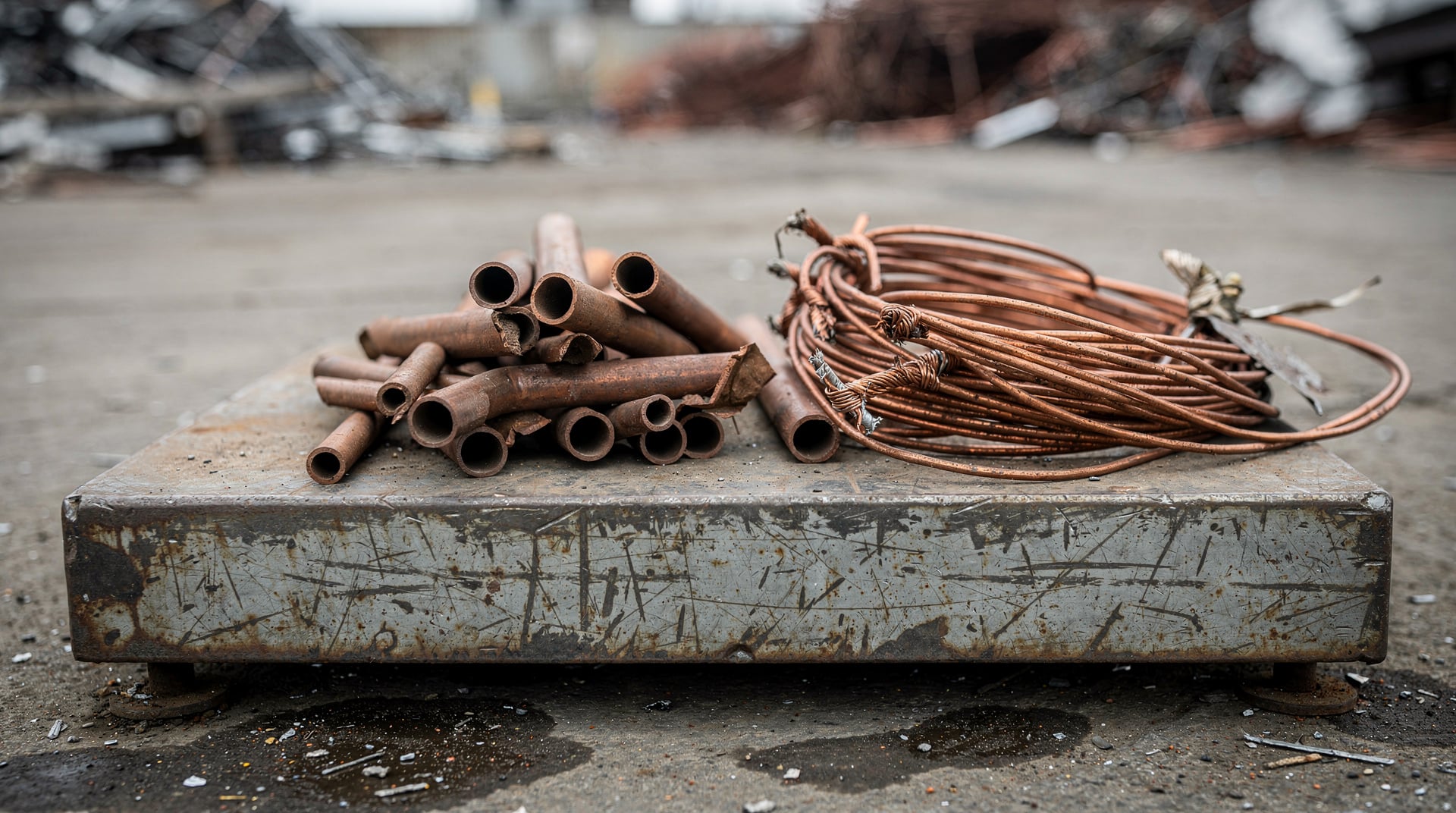
The price is per pound, so weight matters as much as grade. Weigh each grade on its own, in its own bucket or bag.
A bathroom scale is fine for a rough guess. Weigh yourself, then weigh yourself holding the bucket, and subtract. Then take off the weight of the empty bucket.
Before you weigh, do a little prep. It helps your estimate and your grade.
Pull steel screws, clamps and brackets off your copper.
Cut brass valves and fittings off pipe where you can, and put them in their own pile.
Keep bare wire apart from insulated wire.
Let wet metal dry, so you aren't weighing water.
Put it together: a worked example
Here is how the math works. The numbers below are made up. They are not our prices and not today's market.
Made-up example: COMEX copper is $5.00 a pound. A yard pays 80% of that for bare bright and 65% for #2. You bring 10 pounds of bare bright wire and 20 pounds of #2 pipe with solder on it.
Made-up example, bare bright: $5.00 × 0.80 = $4.00 a pound. 10 pounds × $4.00 = $40.00.
Made-up example, #2 pipe: $5.00 × 0.65 = $3.25 a pound. 20 pounds × $3.25 = $65.00.
Made-up example, total: $105.00.
Made-up example, all in one bucket: if the yard grades all 30 pounds as #2, that's 30 × $3.25 = $97.50. In this made-up example, sorting was worth $7.50.
The same three numbers work at any price: COMEX, times the share for your grade, times the weight.
Why your math and the yard's ticket can differ
Your estimate will rarely match the yard to the penny, for four reasons.
The price moved. COMEX can change between the time you check it and the time you sell.
The share is the yard's call. Each yard sets its own share for each grade, and it can change with the market.
The grade is different. If the yard finds solder, brass fittings, paint or steel screws, it may grade your copper lower.
The weight is different. A bathroom scale gives a rough guess. The yard pays on the weight from its own scale.
That's why the last step is always a phone call. Tell the yard what grades you have and about how much of each. Ask what each grade pays today.
Call or visit our Harrisburg yard at 916 S 18th St, (717) 562-7022. It's open Monday to Friday, 9 AM to 6 PM, and Saturday, 9 AM to 3 PM. In Texas, call our Corpus Christi yard at 3717 Saturn Rd, (361) 462-4387, to check its hours before you head over. Ask either yard for today's price on each of your grades.
Questions
How much can I get for 1 lb of copper today?
Check today's COMEX price, then multiply it by the share for your grade (Step 3) and by the weight. That gives you a ballpark. For the real number, call the yard, because the price can change every trading day.
How much is 1lb of copper wire worth?
Clean, shiny bare wire (bare bright) is the top grade, so it gets the biggest share of the COMEX price. Insulated wire pays for the copper inside, so thick cable with thin coating pays more than thin cord with thick coating. Keep bare wire and each kind of insulated wire in separate piles. From late June to late September 2026, insulated wire was the biggest single grade by weight at our Harrisburg yard, so you're far from the only one bringing it in.
How much is a 5 gallon bucket of scrap copper worth?
It depends on what it weighs and what grade is in it, so weigh it. A bucket packed solid with copper would weigh about 374 pounds, because copper weighs 8.96 grams per cubic centimeter (NIST) and 5 gallons is about 18.9 liters (NIST). Loose pipe and wire leave lots of air, so a real bucket weighs far less. Multiply its weight by the price for its grade.
How much is 200 lb of copper worth right now?
Use the same math: 200 pounds times the yard's price for your grade. Here is a made-up example. If COMEX is $5.00 and a yard pays 65% for #2, 200 pounds of #2 comes to $650.00. Sort a load that size by grade before you go, and call ahead for today's prices.